Tell Jiclo once.
It keeps things moving.
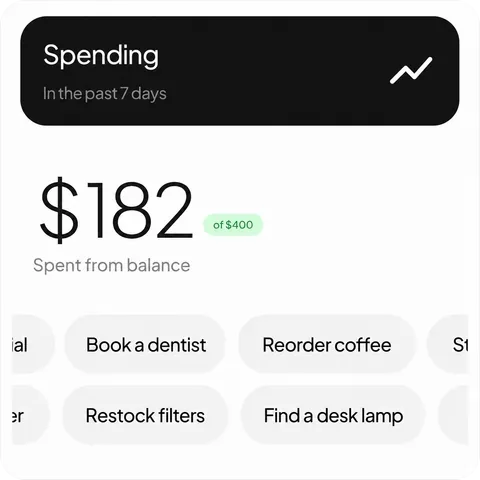
Your agent shops, books and gets the reorder ready, within the budget you set.


You set the budget. Jiclo handles the details.
Jiclo handles orders at retailers and bookings at hotels. All marks belong to their owners.


An AI shopping assistantthat can actually buyand not just suggest

693%
More traffic arrived at shops from an AI assistant in a single year, on Adobe’s count. The visits are already here.
Shoppers already using AI
73%
IBM and the National Retail Federation asked 18,000 people. That many already use it somewhere in the buying journey.
Market by 2033
$65B
Up from $5.7 billion in 2025, growing about 36% a year. Nearly all of this is still ahead.
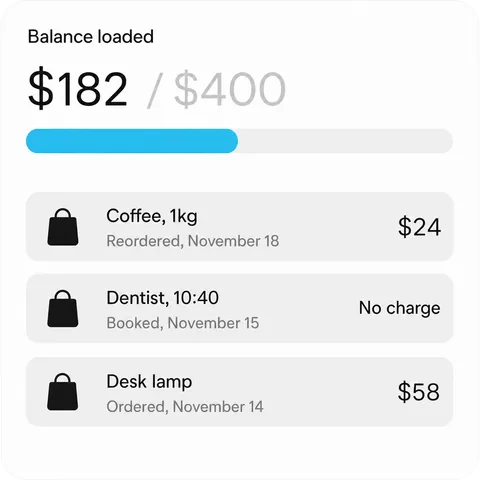
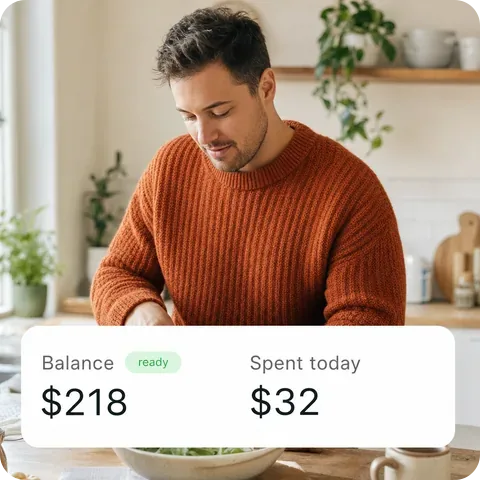
Jiclo cannot spend past the balance you loaded.
Figures from Adobe Analytics, IBM with the National Retail Federation, and Grand View Research.
What Jiclo may do with your money
Set in the software, not left to the assistant.

A limit you set once
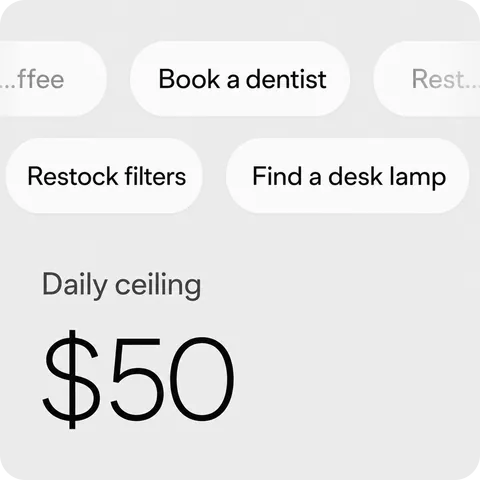
The most it may spend on its own, in one purchase and in one day, is yours to set.

It spends a balance, not your card
Nothing is kept on file unless you turn on automatic top-ups or a subscription, and you can remove it at any time.
Buying, booking and reordering, handled
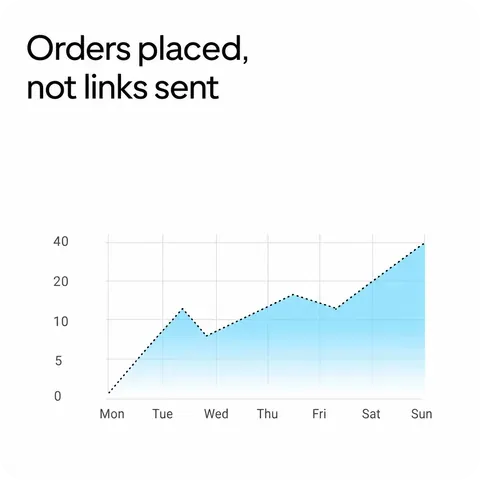
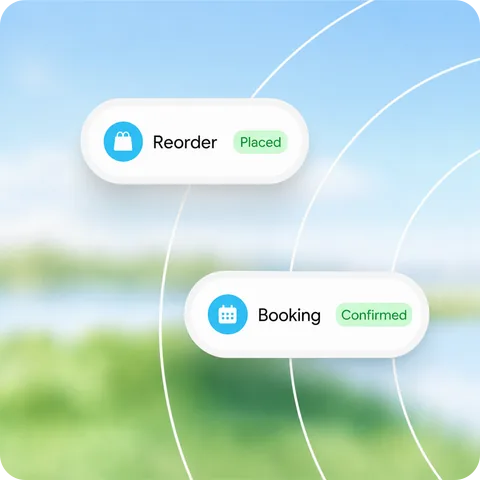
Three things you would otherwise do yourself, in a browser, at eleven at night. Each one ends with an order placed, not a link to go and place it.
Get startedAI shopping agent
Say what you want in plain words. Jiclo finds it across stores, checks the all-in total against your budget, and places the order the moment you press.

AI booking assistant
Appointments, travel and services. Set the ceiling once and Jiclo does the back and forth, then books it on your press and puts it on your ledger.

Automatic reordering
Name a price and a rhythm. Jiclo watches what is running out and has the answer waiting, priced, so restocking is one press rather than twenty minutes.

Can an AI assistant actually buy things for you?
Most cannot. ChatGPT and Perplexity browse, compare and hand you a link, and you finish the checkout. Jiclo is the seller, so it can take the order, charge your balance and have it delivered.
Balance
Ceiling for this month
$250
Jiclo cannot spend past it
Spent so far
$84.20 / $250.00
Per order capA daily capNo card on fileStops at zero
A balance, not your card
You load an amount up front and Jiclo can only ever spend what is in it. The budget is a ceiling the software cannot cross, not a guideline it tries to respect.
This month
Grocery order
Purchase
Dentist, 9:40
Booking
Returned kettle
Refund
One account purchases, bookings and refunds
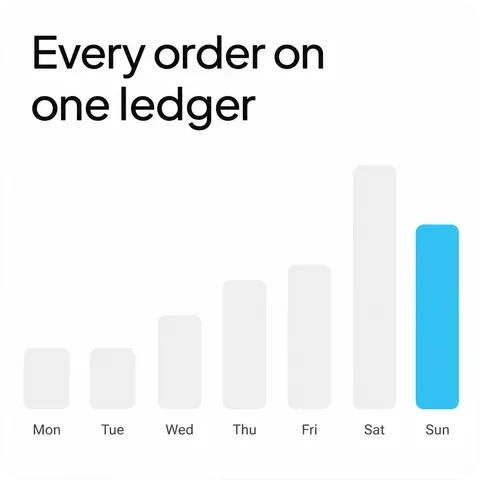
Everything on one ledger
Every purchase and every booking lands on the same account, with the all-in total shown before anything is charged. One price, no fees discovered at checkout.
Specialist shops in one shape an agent can read
Matched on
FitRequirementsAll in priceDelivery windowReturnsIn stockConditionShips to you
The stores Amazon skips
Specialist retailers the big marketplaces do not carry, normalised so an assistant can reason about fit, requirements and delivery rather than just a title and a price.
You askJiclo buysStore ships
Jiclo is the seller
Not a bot holding your card at someone else’s checkout. Jiclo sells to you directly, which is what lets it complete an order rather than hand you a link.
What it costs to load your balance
Jiclo adds nothing of its own to a top-up. The card’s own processing is passed on at what it costs, and the balance is what the agent spends on your behalf.
Get startedYour balance
- No fee from us for loading it, and the card's own processing passed on at cost
- You choose how much to put in
- One all-in price for each purchase, shown before you press
- Buying, booking and the reorder, all against the one balance
- Paid by card, with 3D Secure asked for on every payment
Shopping is already moving to the assistant
Not our claim. This is what the people measuring it are reporting.
“Traffic arriving at retail sites from AI assistants grew 693% in a single year.”
Adobe AnalyticsUS retail sites, November and December 2025, against a year earlier
“AI influenced a fifth of all online sales over the holidays, $262 billion of them.”
SalesforceWorldwide online sales, 1 November to 31 December 2025
“45% of shoppers already turn to AI for help during the buying journey.”
IBM and NRFMore than 18,000 shoppers across 23 countries, published January 2026
“Agentic commerce is forecast to reach $65.5 billion by 2033.”
Grand View ResearchGlobal market, 35.7% a year from $7.7 billion in 2026
What agentic commerce actually means
Plain answers to what people are asking about letting an assistant do the buying.


The things people ask first
Short answers, and where a number comes from someone else it says whose.
What is agentic commerce?
Agentic commerce is a purchase completed by an AI agent acting for a person, rather than recommended to that person to complete themselves. The distinction is the checkout. An assistant that finds a kettle, compares four of them and hands you a link has not done agentic commerce. One that finds the kettle, pays for it and has it delivered has.
What are AI shopping assistants?
They are tools that use a language model to do the research half of shopping: narrowing a category from a description instead of filters, comparing specifications across shops that do not list them alike, and reading the reviews for you. Almost all of them stop before the payment. The ones that go further, like Amazon’s Rufus, work only inside a single retailer.
Can ChatGPT shop for you?
Only narrowly. ChatGPT can complete a purchase through Instant Checkout, launched in September 2025, if you are in the United States and the seller is one of the small number wired into it. For everything else it searches, compares and gives you a link. In March 2026 Shopify’s president said roughly twelve Shopify merchants had gone live with it, out of millions, and put the bottleneck on the onboarding process rather than on merchants.
Is there a free AI shopping assistant?
For research, yes: the free tiers of ChatGPT, Perplexity and Gemini all compare products at no cost. For buying, the question does not quite apply, because most of what you pay is the price of the goods. With Jiclo you preload a balance and it is spent on the things you asked for, with the all-in price shown before you press.
How big is agentic commerce?
Small today and growing quickly. It is under 0.2% of US e-commerce, estimated by Grand View Research at $5.7 billion in 2025 and forecast to reach $65.5 billion by 2033, compounding at roughly 36% a year. The leading indicator is traffic rather than sales: Adobe measured visits arriving at retail sites from AI assistants growing 693% year on year.
What are ACP and AP2?
Two standards solving different halves of the same problem. The Agentic Commerce Protocol, published open source by OpenAI and Stripe, standardises how an agent reads a catalogue and drives a shop’s checkout, and states that the business stays merchant of record. AP2, Google’s Agent Payments Protocol, standardises proof that the agent was authorised to spend, using signed mandates. Neither makes a shop adopt them, which is the part that has not worked yet.
Figures from Adobe Analytics, the National Retail Federation with IBM, and the Agentic Commerce Protocol and AP2 specifications.

Early access, opening 2026
Stop being the one who does the buying
Load a balance and say what it may spend. Jiclo finds it, prices it in full, and places the order when you press, against a ceiling it cannot cross.
Get started